
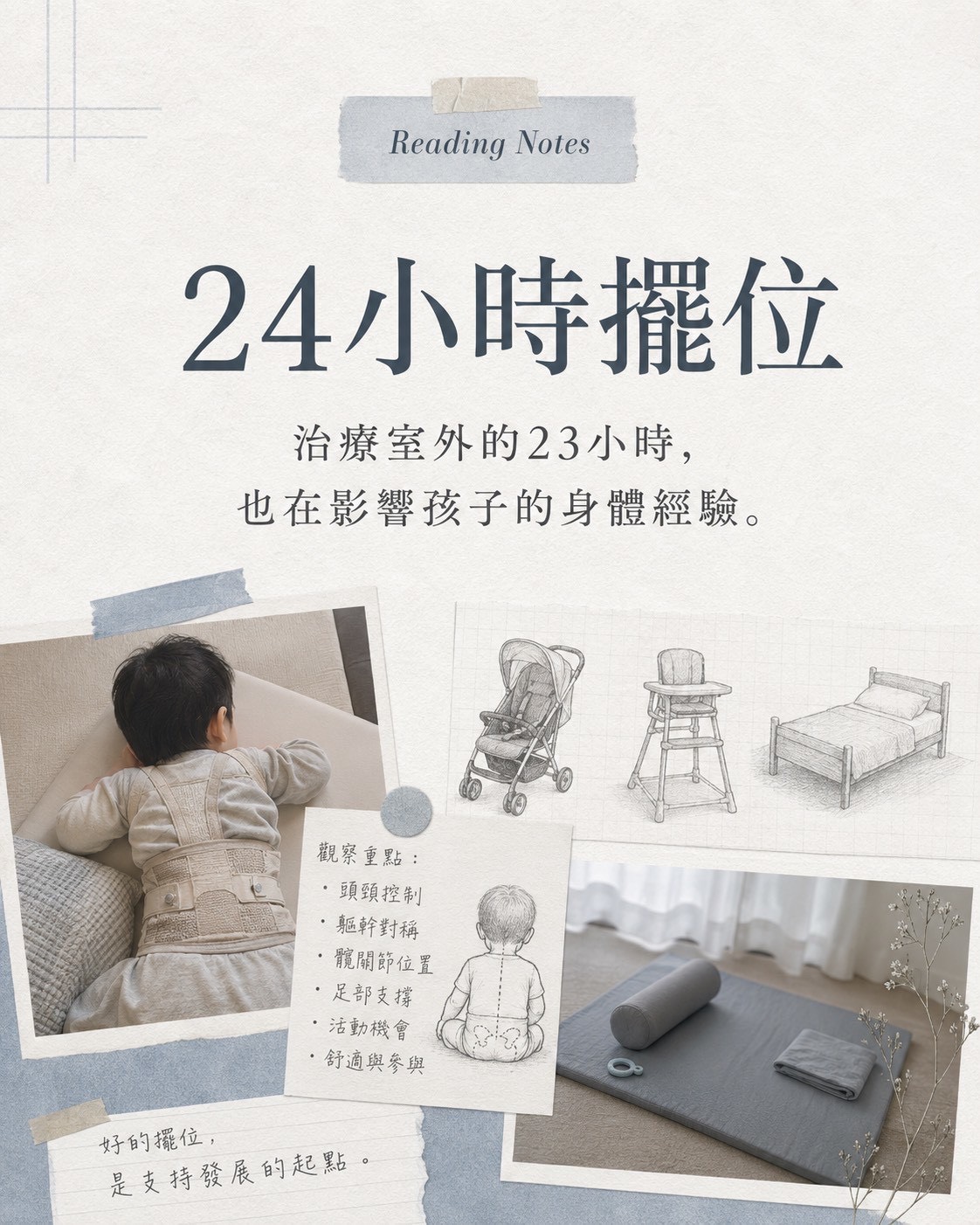
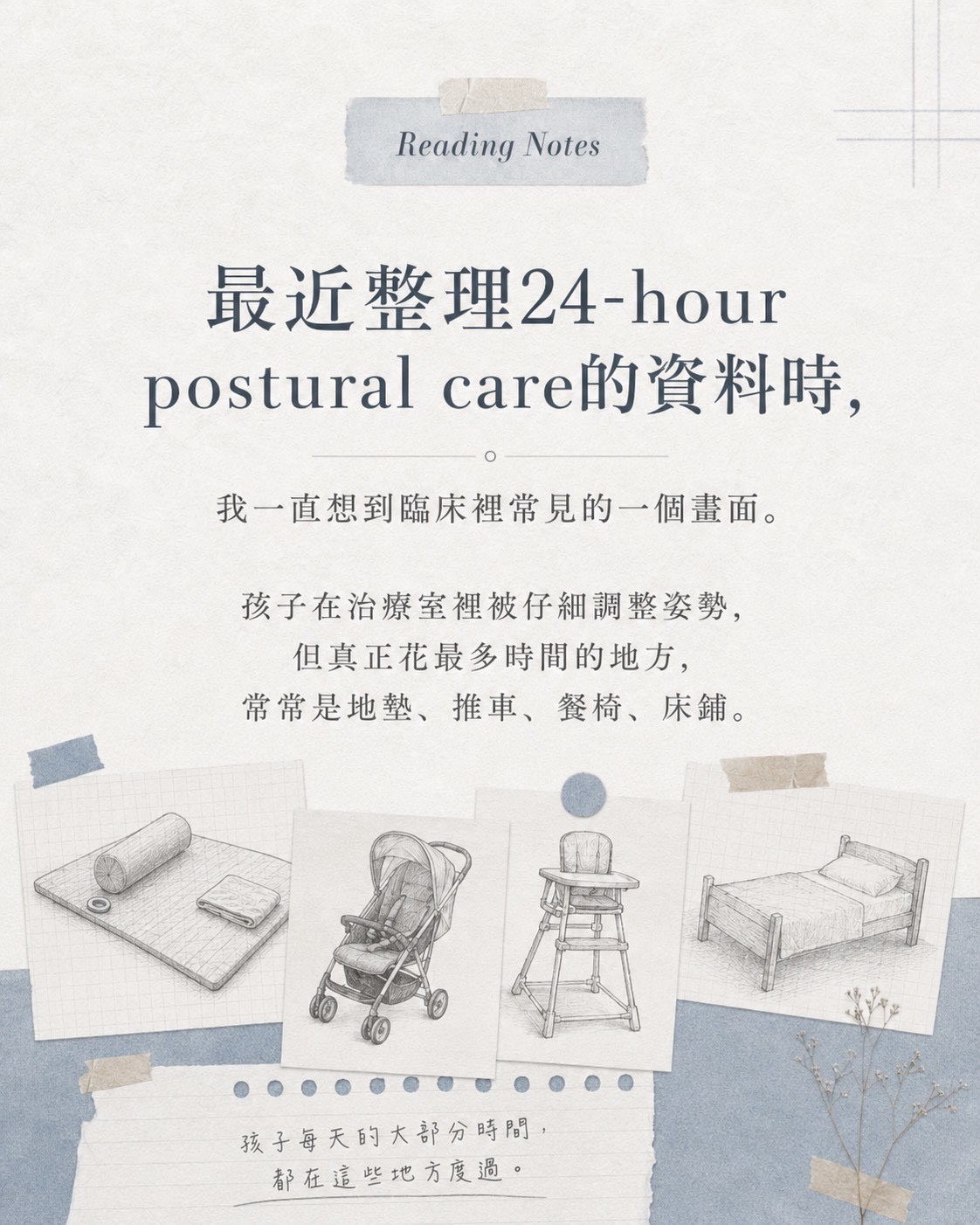



Recently, while organizing materials on 24-hour postural care, I kept thinking of a common scene in clinical practice.
In the therapy center, we carefully observe how a child sits, which parts of the body tend to lean, and what support is needed. However, the place where the child actually spends the most time is often not the therapy center, but rather on floor mats, strollers, dining chairs, car seats, and beds.
What is 24-Hour Postural Care?
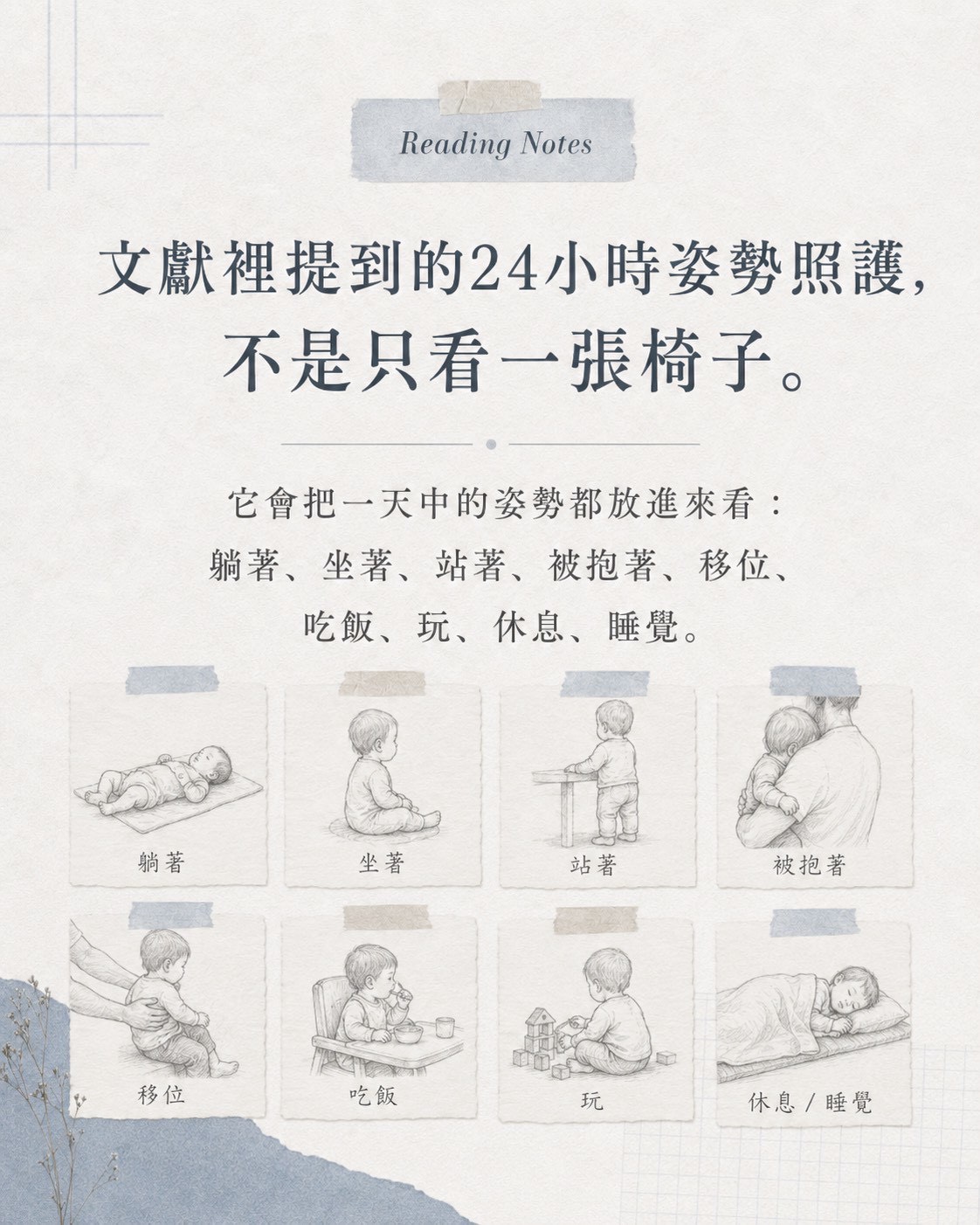
24-hour postural care is not about a specific chair, nor is it about placing the child in a perfectly standard posture. It is more like unfolding the child's day to look at it: where they rest in the morning, how they sit in the stroller during the day, how their body is supported during meals, how they move on the floor mat, and whether they always sleep in the same direction at night.
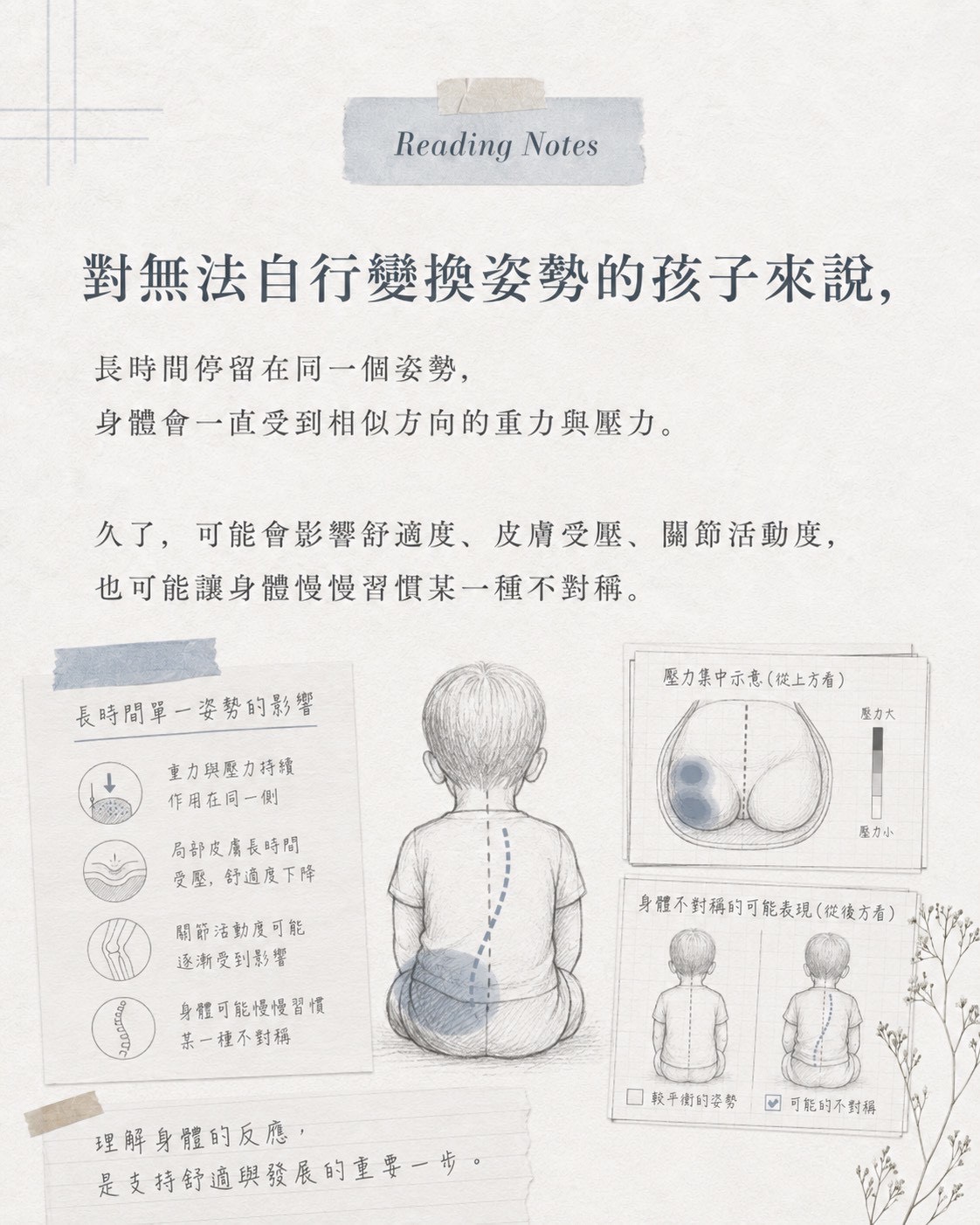
For children who cannot change positions independently and have significantly limited motor abilities, staying in the same posture for a long time can lead to fatigue more easily. It can also affect skin pressure, joint range of motion, comfort, and the opportunities for looking at people, reaching out, and exploring the environment in daily life.
More Worthwhile Questions to Ask
When looking at 24-hour postural care, I remind myself not to just ask: "Is this assistive device good?" or "Is this posture correct?" What we need to ask more is:
- Where does the child spend most of their day?
- Which posture causes the most fatigue?
- In which posture does the child tend to lean to one side the most?
- In which posture is the child more willing to look at people, reach out, play, or eat?
- Can a little bit of adjustment be incorporated into the family's existing daily rhythm?
Limitations of Current Research
The quality of evidence in current related research is still limited. In particular, the effects of nighttime sleep positioning systems on hip displacement, sleep quality, or pain do not yet have strong research conclusions. This reminds us that when discussing 24-hour postural care in clinical practice, it is not appropriate to frame it as a fixed approach or a standard answer.
It is more of a perspective of observation. It allows us to see the child's time outside the therapy center and to recognize the physical experiences accumulated in daily life.
Some issues are not necessarily visible only in the therapy center. And some adjustments do not have to be drastic to be considered a starting point.