
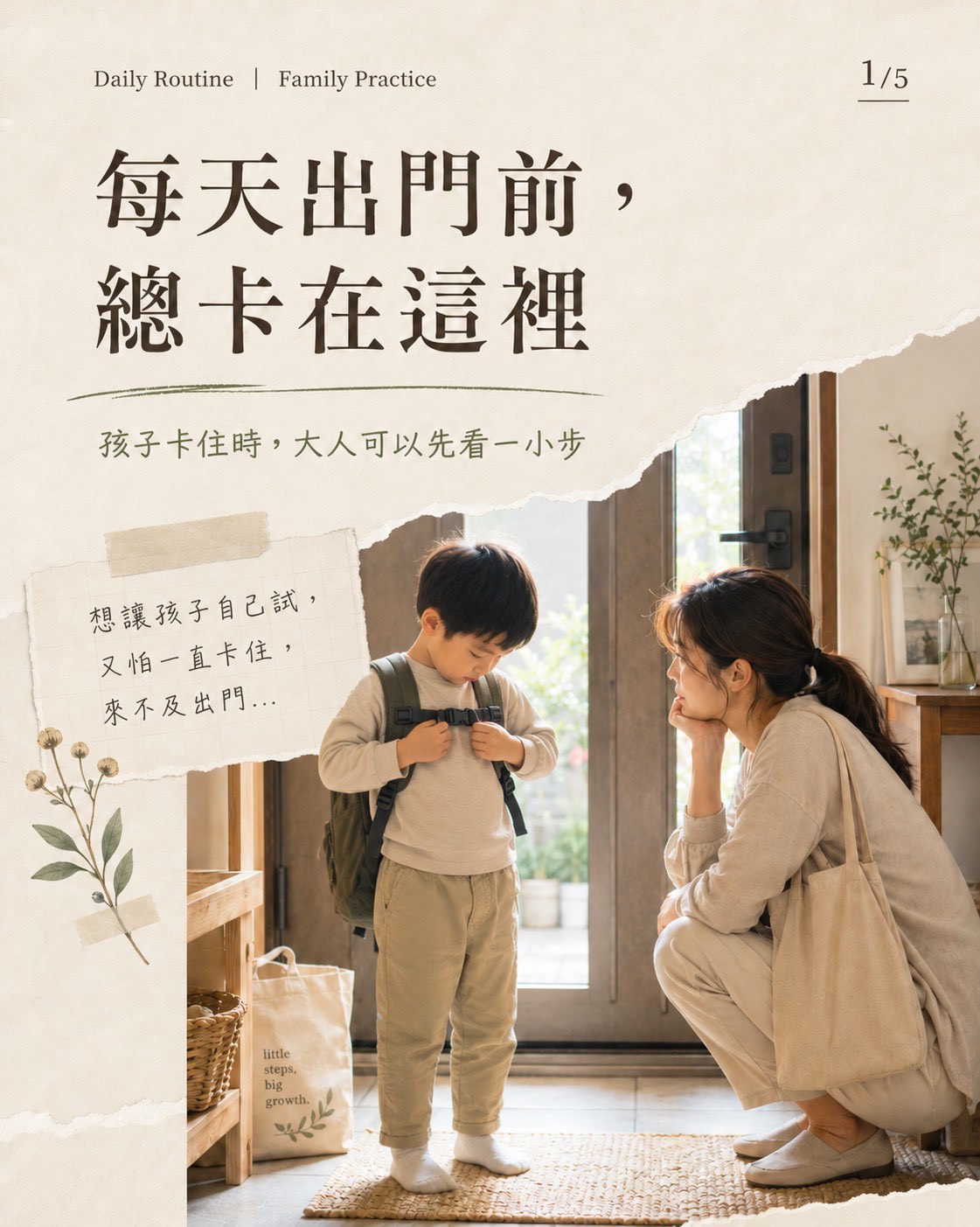
Recently, a mother told me that her child gets stuck on the chest buckle of their backpack every day before leaving the house.
The mother is actually very attentive. She knows her child is learning to pack their own backpack and wants to give them more opportunities to try. However, time is limited when heading out in the morning. As the child tries and the adult waits, they often both end up stuck.
When the child gets stuck, the mother also hesitates. Should she wait a little longer? Should she remind them again? Or should she just buckle it for them so they can get out the door?
Hearing the mother say that sometimes they spend 5 to 10 minutes on this buckle, I felt a bit of heartache. Not because the child is practicing, but because this small task has become a daily source of stress.
Breaking It Down: The Child Has Already Accomplished a Lot
Later, during a session, the mother brought the backpack, and we looked together to see exactly where the child was getting stuck. Upon observation, we found that the child actually doesn't completely misunderstand what to do.
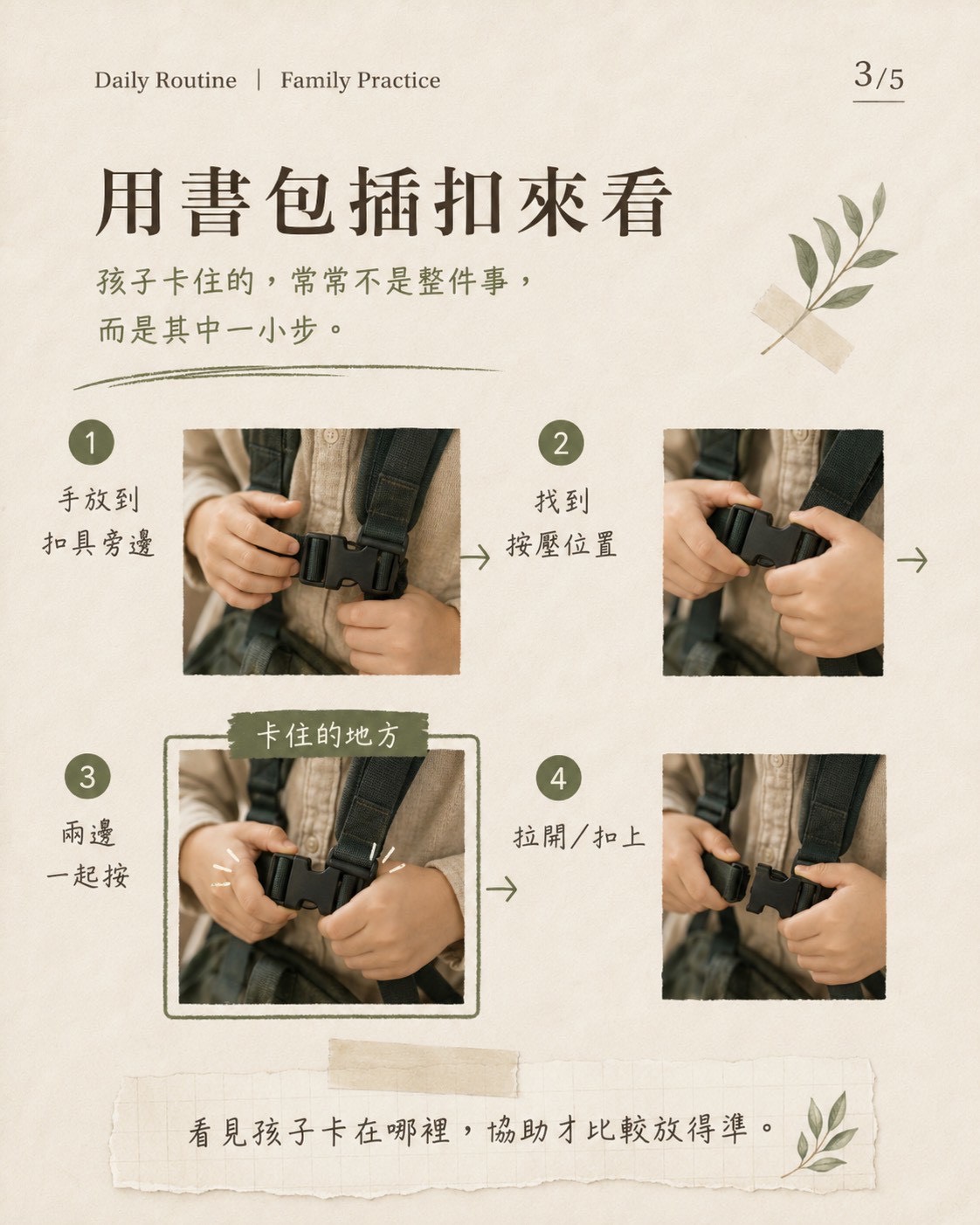
He knows to place his hands near the buckle and understands the goal is to open or close it. After the teacher placed small stickers, he was better able to find where to position his fingers.
The real sticking point is pressing down with both fingers at the same time. Often, one side is pressed down, but the other side isn't pressed all the way, so the buckle still won't open.
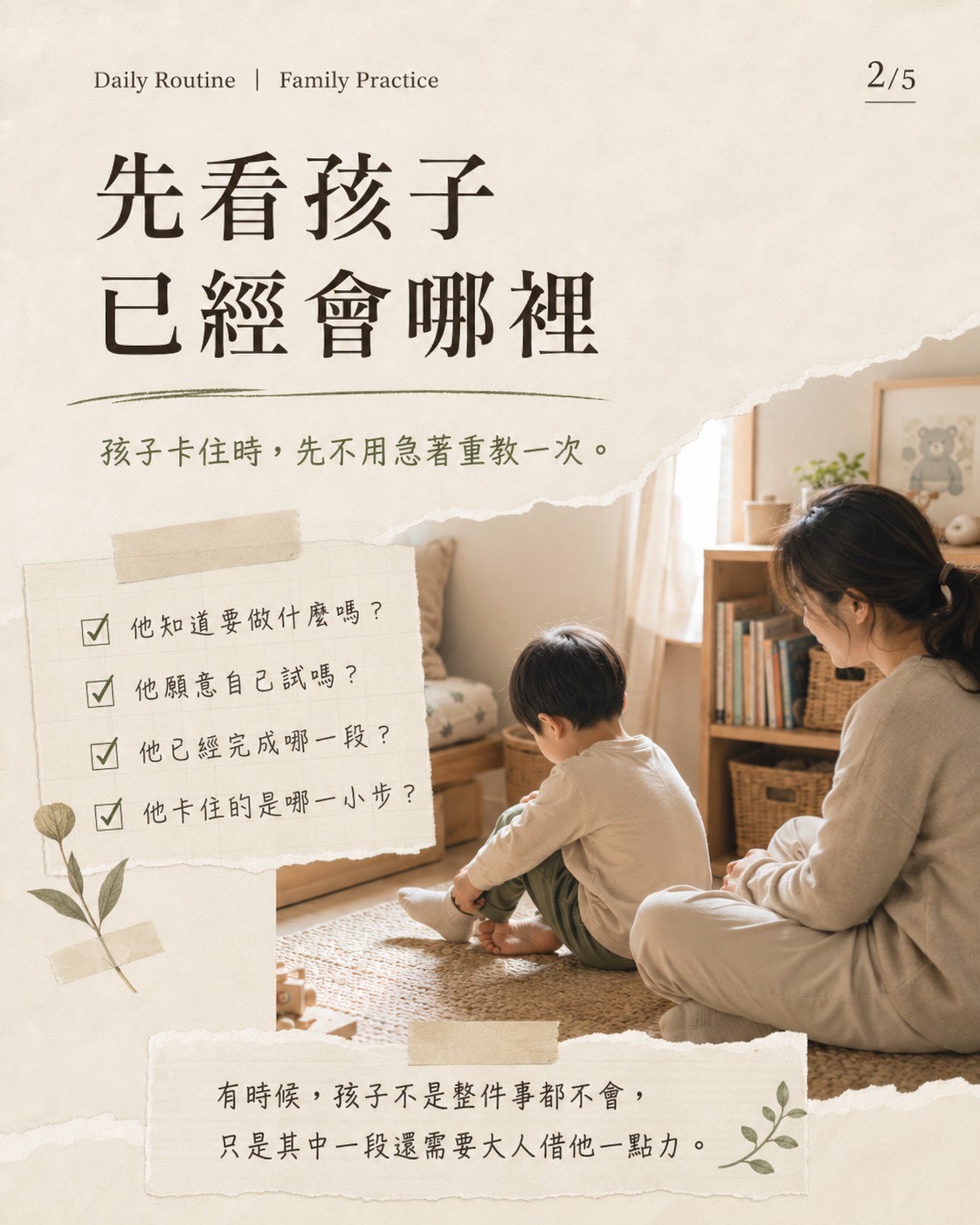
If we only look at the final result, it's easy to think, "Why did they fail again?" But if we break the action down, we'll see that the child has already completed several preceding steps:
- He notices the buckle
- He is willing to try on his own
- He knows where to bring his hands
- He is learning how to apply force with both fingers simultaneously
What's stuck isn't the entire task of "wearing a backpack." It's just one very small step.
Scaffolding Theory: Providing Support Exactly Where It's Stuck
This is where I think of scaffolding theory.
Applying scaffolding theory at home doesn't necessarily mean setting aside a special practice time. Sometimes, it just means the adult pauses to observe:
- What can the child already do?
- Which small step are they stuck on right now?
- Can I provide a little help so they can still participate?
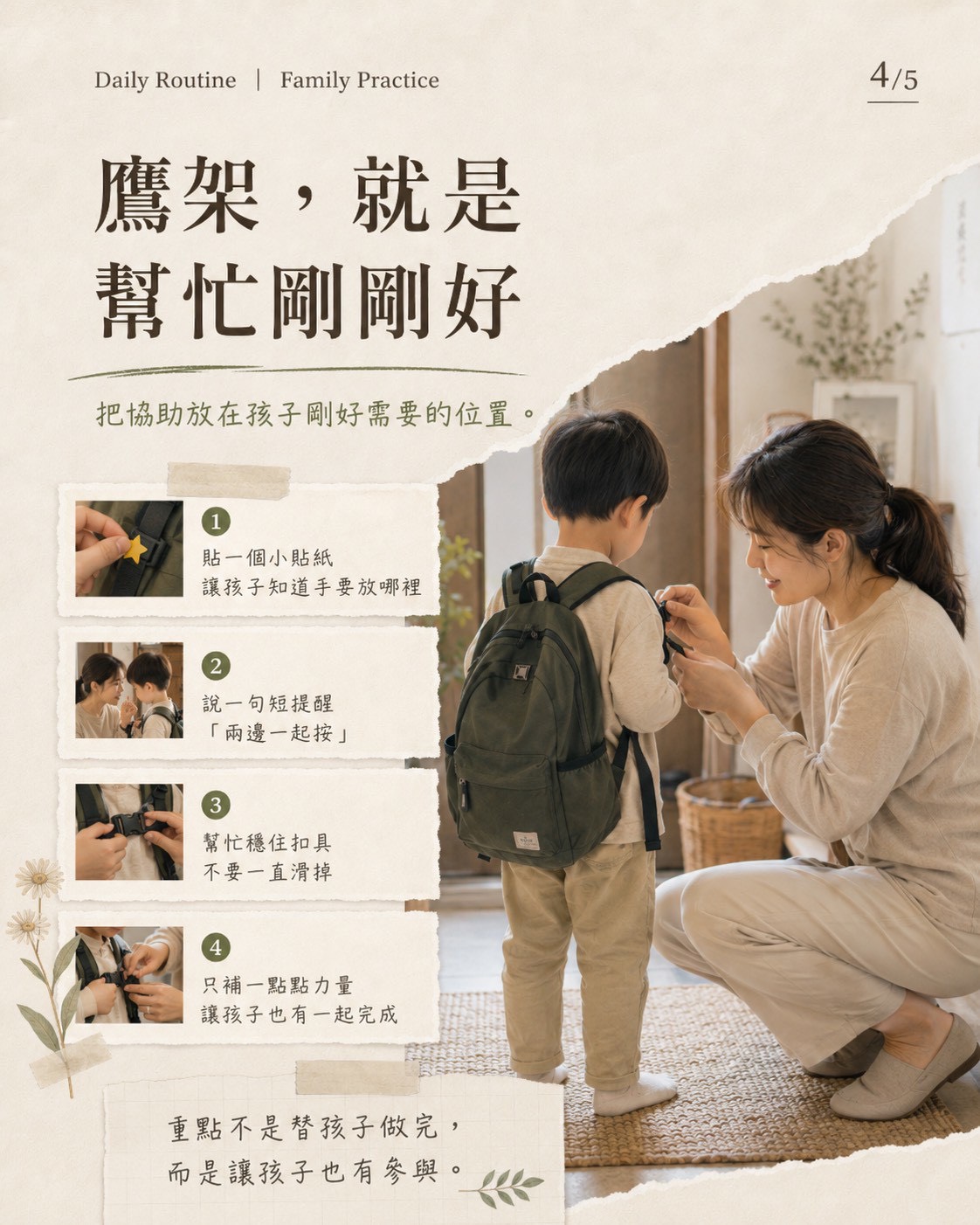
With this backpack buckle, helping doesn't necessarily mean opening the buckle directly for them:
- It could be placing a small sticker so the child knows where to put their hands
- It could be a short reminder: "Press both sides together."
- It could be the adult helping to stabilize the buckle so it doesn't keep slipping
- Or it could be the adult adding just a little bit of force when one side truly cannot be pressed down
The child is still doing the task. They aren't standing by waiting for the adult to finish; instead, they find the position together, press together, and complete a small part of the task together.
Other Examples in Daily Life
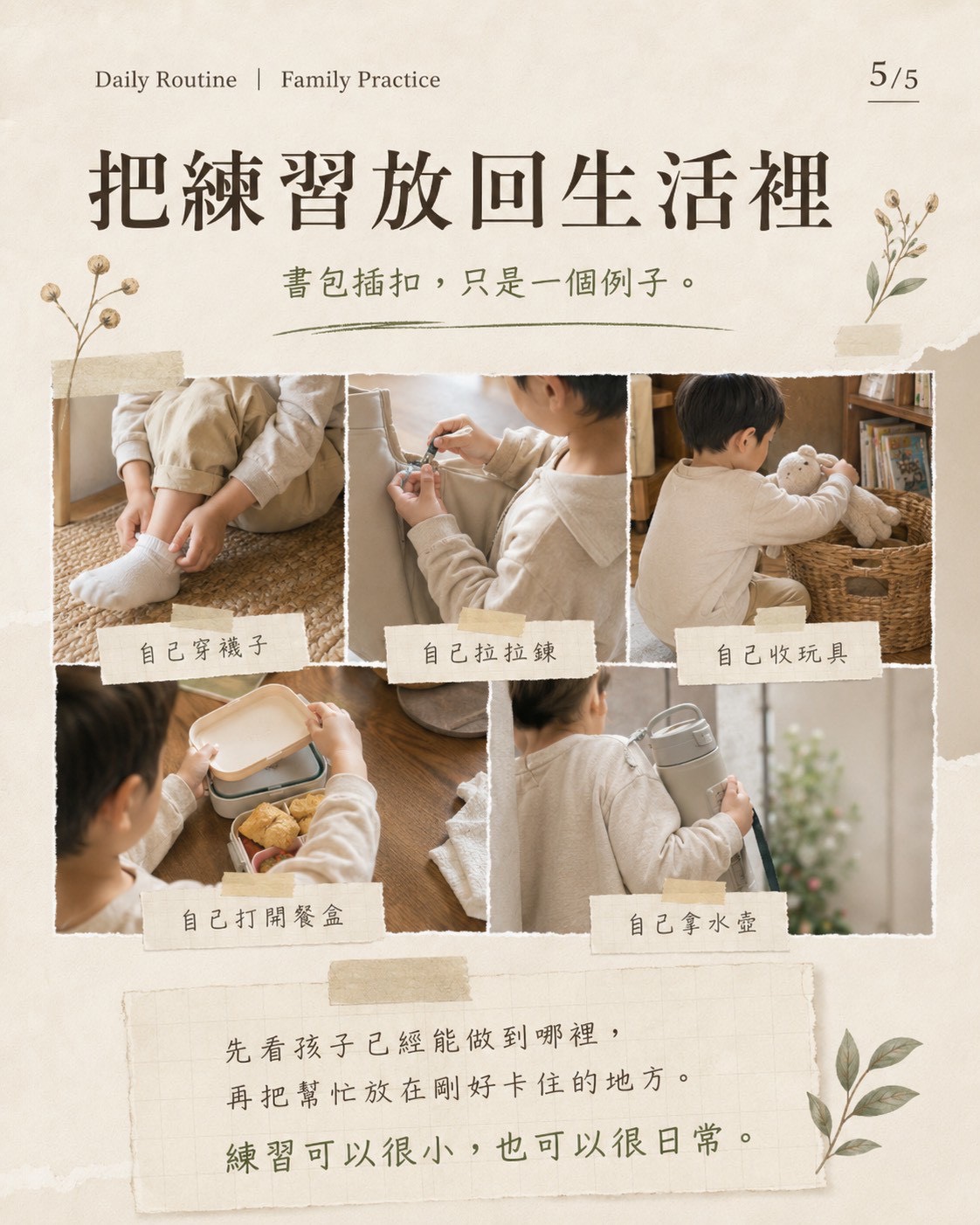
The backpack buckle is just one example. There are many such small moments in daily life:
- Putting on socks: The child knows to put the sock over their foot, but gets stuck pulling the cuff open
- Zipping a jacket: The child knows to pull up, but gets stuck holding the base with one hand and pulling the zipper up with the other
- Picking up toys: The child knows they need to tidy up, but gets stuck because there are too many items and they don't know which to pick up first
- Holding a water bottle: The child wants to hold it, but gets stuck because the bottle is too heavy and they don't know how to stabilize it
The child doesn't necessarily not know how to do the entire task; sometimes, they just need the adult to lend a little help with one small step.
First recognize what the child has already accomplished, then provide help exactly where they are stuck.
You don't necessarily have to do a lot more; simply integrating it into the child's everyday life often makes the progress last longer.